What does equality and neurodiversity mean?

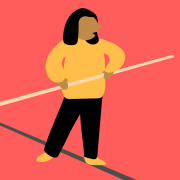
Jean Francois Gravelot “The Great Blondin” was the first person to tightrope walk across Niagara Falls quarter-mile gap. He was not just content with crossing the gap once, he did it over 300 times and each time pushed himself to a new level of difficulty. This included cooking an omelette in the middle, sitting down, and lowering a rope to collect a bottle of wine from the ‘Maid of the mist’ boat below and even carrying his manager on his back.

On one occasion he crossed with a wheelbarrow to the rapturous applause of the crowd. On reaching one side he approached a Royal party who were watching him and asked if one of them would like to make the trip inside the wheelbarrow. He was declined, so he asked the crowd if anyone else would like to make the crossing in the wheelbarrow and no one spoke up except for one small old woman. He crossed successfully with her in the wheelbarrow to rapturous applause. It was reported later that this woman was his mother.

Diversity is being invited to the party. Inclusion is being asked to dance.

Vernā Myers

Before we can even begin to engage in such feats as Jean achieved at Niagara, we first need the opportunity to get involved. That means being able to take part and in the words of Vernā Myers being asked to dance. I would like to take this further though and explore what it takes to get to the point where you can dance like nobody’s watching.

Because diversity is about being asked to take part, equity is about having the transport to get there, inclusion is about being asked to get involved and equality is performing like no one is watching.

Diversity – is being invited to ‘The Party’

For equality and neurodiversity to be a reality this is a statement of intent for neurodivergent individuals.

It is about knowing that you can bring your best self to the situation you are working on. What is important is that this is not a half-hearted attempt at inclusivity but instead a concerted effort to invite those that think differently to the table. This is not one of those invites when you say you want people to come, but you do not expect them to turn up! Find out more here.

Equity – is having proper transport to get there

This is more than just supplying a bus or tightrope but instead supplying proper transport for the individuals that have been invited. For neurodivergent individuals, this is about thinking about the environment in terms of the tools that are supplied and the way things are done. For example, it could be about creating quiet spaces or supplying assistive technology tools. The key thing is that places are created where people feel safe and equipped to perform.

Understanding the guidelines (or where the rope is) for your workplace and having it made clear is vital. Find out more here.

Inclusion – is being asked to participate

To be included you need to be invited and have the tools and environment to be present. Being asked to take part shows the value that you are placing on the person you are asking. Asking them to take part because you see their strengths and know that they can add value is vital. Inclusion is not a display, it is about mutual benefit and creating places that allow the individual to walk the most difficult tight ropes.

Equality and neurodiversity – performing like no one is watching

Equality and Neurodiversity is about creating a level playing field where individuals get to use their skills and competencies in great ways. It is a place where creativity explodes, and innovation is paramount that can only be realised if you can bring your full neurodivergent self to work. It is about challenging and being okay with offering insight without fear and recognising the value that you can bring whilst encouraging the potential you see in others.

This is only possible if diversity, equity, and inclusion are present then equality and neurodiversity works!

Neurodiversity and neurodivergent thinking are hot topics. There are many ways to approach this area. I would encourage you to think deeply about how you can utilise the great potential these thinking skills can offer to your organisation. If you would like some help or just a conversation to explore this further, please get in contact.


What is your promise to your future self?

When I joined secondary school, we had the opportunity to write a letter to our future self about where we wanted to be. I remember pondering over all the great things I’d like to achieve, including flying to the moon and playing rugby for England. Then I concluded that what I wanted at that time was to be the most successful bank robber in the world and retire to the Costa del Crime. I’m pleased to say my aspirations changed, I’m not sure that promise to my future self would have been particularly helpful for my long-term health and well-being.

How will your promise to your future self impact you?

It is easy to make a big hairy promise to your future self without thinking about the implications for the things we care about. Or volunteering to take on new responsibilities and projects that have far-reaching potential future impacts. The challenge is not to avoid big commitments, but to make sure we understand the implications of them and consider how they will affect our future self. I would always encourage you to take a moment, preferably in a quiet space to look forward and imagine what life will be like one, two, and even six months down the line with the choice you are about to make in mind.

Excepting and sharing your strengths and difficulties?

Neurodivergent individuals have a soup of traits that form strengths and difficulties depending on the situations based on their environment. If they have had negative experiences in the past, they will often choose not to share the traits that cause them difficulties. This can result in their needing to work far harder at the choices they have made and can sometimes break down if changes happen within the organisations they are working in. I mention this because the choices you make may well also have implications for the people you work with and collaborate with.

Will you choose when to go into conflict with others wisely?

Making promises to your future self inevitably involves change. With change can come conflict as our ideas and aspirations do not align with those who we are working with or collaborating with closely. One of the promises we need to consider to our future self is, when will we choose to go into conflict and what will we choose to do to avoid it?

Will you treat the things that have gone wrong as CPD?

Promises to our future self will often involve risk. This could be personal, financial, reputational or some other sort of risk. When things go wrong, they can often be expensive for us and the question we need to ask ourselves is are we prepared to treat it as CPD (continuous professional development).

As a side note, I have been on many training courses some of them incredibly expensive and have learned that we never fail to learn from the things that have cost us dear.

Will your promise to your future self allow you to hold firmly to your values and not compromise?

In my example, at the beginning of this post I talked about my aspiration of being a bank robber, but what I had not thought about was how this fitted with my values in terms of fairness and charity. Now, this is an extreme example, but it is one we should consider when looking at promises to our future self. Do our promises align with our values, for example, if one of your values is family, are you making promises that mean you spend substantial amounts of time away from home creating an imbalanced lifestyle.

Will you live in the reality of today, not the ifs and but’s of tomorrow?

When making a promise to your future self, are you prepared to live with the consequences. Are you happy that there will be things that you cannot do because of the choices you have chosen to do. It is easy to look back with ifs and buts, this is not an option if you made a choice and have stuck to it.

Will you be kind to yourself?

As you consider the choices that you want to make and the implications they may have for your future self I would encourage you to be kind. We have one life and it is full of adventure, challenge disappointment and grief.

“There are only two ways to live your life. One is as though nothing is a miracle. The other is as though everything is a miracle.”
Albert Einstein

If these are questions that affect you, I would encourage you to reach out and have a conversation with someone you can trust. If I can help with that conversation, please feel free to get in contact.

Does it take a village – to run well?

Running my first 10 kilometre (km) race, this story started five years ago when a few friends and I decided that we wanted to row (we were the most ragtag bunch of rowers you can imagine). At the time I was out of shape but wanted to be a better version of myself for me and my children. So, a friend of mine called Dave and I (with a couple of others), set up something called Monday Club, which as you can guess happens every Monday. It is an opportunity for some 40+ year old men and women to work out and play at being boxers and gymnasts. This club inspired me to do more with myself and through conversations with my friends, I decided I was going to give running a go (I wanted to run well).

Running begins

I started to run regularly with a bunch of people from Monday Club who inspired and helped me to move forward and signed up for my first big race!

Time to race

When the race came around, I was expecting to be looking at my watch working out my timings and trying not to run way too fast. Adding at this point that my nickname was “the beast” as I do everything at full throttle, not holding anything back and burning out much of the time. Come race day I expected to turn up on my own and run the race which I had practised.

We were off

The race began in a flurry of activity and the guy I was chasing down the road started to encourage me to run with him and this is where the support began. Turning the first corner my friend Simon was there rooting for me, telling me to take it easy and run at the pace I had planned. Running a further 500 meters up the road and my friend Dave was there telling me not to overcook it and keep to my pace, pull my shoulders back, breathe and enjoy it. As I continued to run the race these two guys keep popping up, rooting for me, pushing me and encouraging me to be the best I could be.

The final 2 km

Things were starting to hurt now and my shoulders were all hunched. Then my friend Dave appeared and started to run with me. At first, this was about me getting my confidence and form back, then I noticed myself accelerating. Moving from someone slipping backwards to someone who was overtaking people and running faster and faster.

Finishing strong

Coming into the final 700 meters I was a transformed person running with determination and gusto. Finishing the race in 41 minutes 26 seconds, 1 minute 26 seconds outside of the goal I set myself, but that did not matter, I had learned how to run a race well and that is a lesson I will not forget.

My first 10 k race was not run on my own, I ran it with people who believed in me and enabled me to do my absolute best, inspiring me to do it again.

What I learnt

Sometimes things take longer than you first expect.

When I started this journey, I wanted to row a boat and I ended up running a race. That does not mean that I will not row a boat one day too. What I did instead was achieve something else that takes me closer to that goal.

Sometimes what you want takes time to work out

This is true in many aspects of our lives. What is important is to keep moving forwards. It is vital to have champions and cheerleaders on your team to keep encouraging you to seek out what you want. In my case, it is about being a better version of myself, for you it may be quite different, but I would encourage you to keep on looking for it.

Practice is the key to everything – you will need to do it a lot so make sure it is fun!

As with everything worth doing there is always a lot of practice involved. The biggest transition for me has been the movement from only enjoying the end goal to enjoying the practice. This is relevant to the roles we do and the things we want to achieve. If we do not enjoy the day-to-day work to get us to a goal I do not believe we will be anywhere near as fulfilled as we should be.

The best coaches will come and run along with you

Sometimes we need help, sometimes we need advice and sometimes we need people to run along with us. It lifts our heads and gives us the capability to be genuinely great.

Doing things with a village is the best

Reflecting on this experience, the image of the village of people supporting one another to achieve their goals is an incredibly attractive one. Where one achieves much, everyone achieves much and this is a principle that can help move forward some of the key aims we have in our lives.

Who is in your village?

If you would like some help to explore this further, please get in contact.