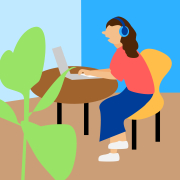
A workplace that works for everyone: a neurodivergent perspective

Imagine a workplace that works for everyone, regardless of how their brain processes information. For neurodivergent professionals, the right environment isn’t just about productivity, it’s about maintaining energy for what matters most: our families, passions and lives beyond work.

According to Savills UK [1], 28% of employees feel their workplace actively hinders their productivity. This isn’t just a workplace issue, it’s a quality-of-life challenge that follows us home.

Understanding what’s non-negotiable in a workplace that works for everyone

Before diving into specific solutions, it’s important to identify what’s essential for productivity. For many neurodivergent professionals, these non-negotiables might include:

  • Periods of uninterrupted focus time
  • Control over sensory input
  • Clear communication channels
  • Regular breaks to prevent overwhelm

The need for these elements isn’t just a preference; it’s backed by research. Savills UK found that while 71% of employees want quiet spaces for focused work, only 30% have access to them [1]. This gap between need and availability doesn’t just impact workplace effectiveness; it reduces the energy we need for meaningful moments with loved ones after work hours.

Creating your ideal space

Whether you work from home or in a shared office, a workplace that works for everyone should be designed to support your needs and enhance productivity. Start by positioning your desk to maximise natural light, which can improve your mood and sharpen your focus. Create an “essentials zone” within arm’s reach, keeping chargers, fidget tools and other frequently used items easily accessible. Use notifications only for important communication or custom filters for urgent messages that can help reduce interruptions. Keep your priorities visible without adding visual clutter, a whiteboard or a digital display can strike the right balance. Finally, incorporate soothing elements like weighted cushions, soft lighting, or noise-cancelling headphones to create a calming atmosphere that minimises distractions.

Transforming shared workplaces into a workplace that works for everyone

A workplace that works for everyone could involve creating quiet areas where people can focus without distractions while offering various seating options, such as standing desks or private nooks, to suit different work styles. Providing a simple list of available adjustments makes it easier for everyone to request what they need. Additionally, rethinking how meetings are run can also make a difference. Offering flexible ways to join, like remote attendance, can ensure everyone can participate in a way that works best for them. Finally, thoughtful design touches, such as soft colours and adjustable lighting, help create a comfortable and welcoming environment. 

The science of stress and its ripple effects

The impact of poor office design isn’t just confined to working hours, it ripples through our lives. Research from HRD Australia reveals that noise in open-plan offices can trigger a 34% rise in stress levels and a 25% increase in negative mood [2]. This heightened stress doesn’t simply disappear when we leave the office, it follows us home, affecting our patience, presence and ability to engage meaningfully with our families.

However, there’s hope: According to ZipDo, thoughtful design changes can reduce workplace stress by up to 30% [3]. Imagine what this means beyond productivity metrics, 30% more emotional energy for family dinners, weekend activities and quality time with loved ones.

Making it work: Practical Solutions on a Workplace That Works for everyone

Here’s where innovation comes in. Consider applying:

  • Flexible break systems – creating a menu of break options like meditation rooms, walking meetings or quiet spaces
  • Normalise “reset periods” between tasks
  • Allow for flexible scheduling around energy levels and family commitments

Creating a more inviting and comfortable workplace starts with allowing personalisation, even in shared spaces. Encourage employees to take ownership of their work environment by making small adjustments that help them feel more at ease. Introducing flexible “zones” where employees can claim a space for focused work can create a greater sense of control and providing the freedom to adjust lighting, seating, or desk setups, within agreed limits, helps people shape their workspace to suit their needs, leading to a more pleasant and productive atmosphere.

Rather than striving for perfection, focus on what works best for the team. Solutions need not be flawless; they need to support productivity and well-being. Regular check-ins allow space to review and adjust what works, ensuring changes stay relevant and helpful. Clear guidelines outline what parts of the environment can be changed and what cannot help everyone feel confident in adjusting.

Progressive policies that support everyone

Supporting a diverse workforce starts with offering hybrid work options that accommodate different energy levels, personal preferences and family responsibilities. Providing neurodiversity training helps build understanding and creates better teamwork across all employees. Clear communication such as using written follow-ups ensure that everyone stays informed and included, no matter their working style or location.

Making change sustainable

Remember, creating a workplace that works for everyone isn’t just about professional success but sustainable well-being. When we reduce the cognitive load of managing our work environment, we hold onto precious energy for what truly matters. That might mean having the patience to help with homework after a long day, the energy to pursue personal interests, or simply being more present with our loved ones.

The goal isn’t to create a perfect environment, but to build one that supports your whole life, not just your work lives. With thoughtful design changes potentially reducing workplace stress by 30% [3], we’re not just investing in better workspaces, we’re investing in better lives, stronger relationships and happier families.

Your turn

How has your work environment affected your life beyond the office? Share your experiences; every perspective helps build workplaces that support productivity and the full spectrum of human life and connection.

Footnotes
Savills UK (2023). Workplace productivity and quiet spaces study. [1]
HRD Australia (2023). Impact of open-plan offices on workplace stress and mood. [2]
ZipDo (2023). Workplace design and stress reduction analysis. [3]
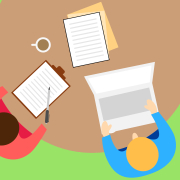
Body doubling in the workplace

Body doubling in the workplace: A neuroinclusive strategy for focus and connection

Introduction

If you’ve ever found it easier to focus simply because someone else was in the room, you’ve experienced body doubling in action.

This practice—working in parallel with another person—has become a quiet revolution in neurodivergent communities, particularly among people with ADHD, autism, and executive function differences. For many, it’s not about being watched, but about being witnessed: the subtle motivational power of another human presence.

For HR leaders and managers, body doubling in the workplace provides a fresh, low-cost approach to fostering focus, connection, and psychological safety. It’s one of the simplest tools in the journey toward a truly neuroinclusive workplace.

What is body doubling?

Body doubling is the act of completing a task while another person is present—either in person or virtually. The “double” might be a colleague, friend, or even a stranger online, who is quietly engaged in their own work at the same time.

It’s not surveillance or supervision. Instead, it works through co-regulation—our nervous systems naturally syncing with the calm, focus, or steady rhythm of another person.

Reported benefits include:

  • Easier task initiation (breaking through “task inertia”)
  • Reduced procrastination and distraction
  • Better emotional regulation and sense of accountability
  • Less isolation, especially in hybrid or remote roles

The science and evidence behind body doubling

Formal research on body doubling is still emerging, but the underlying mechanisms are scientifically credible. Here’s what the evidence shows so far:

  1. Academic & Experimental Findings

  • Limited but promising research: A 2025 pre-print titled You Are Not Alone: Designing Body Doubling for ADHD in Virtual Reality (arXiv) found that both human and AI body-double conditions improved task completion compared with working solo.
  • Comparative study (VTechWorks): In a small sample (n=40), participants completed tasks faster and with improved sustained attention in both in-person and video body-double conditions.
  • Theoretical grounding: Clinicians describe body doubling as an externalised executive function that supports a social prompt that helps maintain attention, motivation, and time awareness (Cleveland Clinic; Newport Institute).
  • Adjacent studies: Broader research on social facilitation and co-working effects supports the finding that mild social presence can enhance attention and persistence on tasks.

In summary:

The evidence base is small but growing. The mechanisms of accountability, externalised focus, and co-regulation are consistent with well-established cognitive and behavioural science.

  1. Practitioner and Community Reports

ADHD organisations and coaching networks consistently highlight body doubling as a practical focus tool:

  • CHADD: It helps individuals “choose a specific project, set a time, and be accountable to another person.”
  • ADDA: “The body double becomes a model of control and a mirror.”
  • VeryWellMind: Reports benefits in starting, sustaining, and finishing tasks, with reduced shame and isolation.

Common themes include:

  • Initiation support: Makes starting less overwhelming.
  • Emotional buffering: Reduces anxiety and loneliness.
  • Accountability: Encourages steady focus without external pressure.

Drawbacks are also noted:

  • Too much chatter can distract.
  • Some users feel observed or self-conscious.
  • It can foster over-reliance if not balanced with solo work.

Why body doubling matters for neuroinclusive workplaces

Body doubling aligns with key principles of neuroinclusive design: flexibility, autonomy, and shared ownership of productivity.

In Neurodiversity and Time, we examined how individual rhythms and attention patterns vary significantly. Body doubling supports these rhythms by allowing employees to borrow structure from shared focus rather than forcing conformity to rigid routines.

For HR and organisational leaders, adopting such techniques communicates trust:

“We understand focus looks different for everyone—and that’s okay.”

Exploring potential apps and tools

The rise of hybrid and remote work has led to a wave of digital tools that enable virtual body doubling. The following examples are provided for awareness purposes only, not as formal recommendations. Always review the suitability, privacy, and accessibility of any new platform before introducing it.

Example App What It Offers Format
FocusMate One-to-one timed co-working sessions with accountability check-ins. Virtual 1:1
Flow Club Structured group focus sessions led by facilitators. Group
Flown Combines live “deep work” sessions with wellbeing breaks and community. Individual & group
Caveday Guided work sprints with communal breaks and motivation prompts. Group
Centered Adds gamified focus tracking and gentle AI support for maintaining flow. Solo with social features

💡 Tip: If your organisation already uses Microsoft Teams or Google Meet, you can replicate the same structure by scheduling “silent co-working” slots or optional “Focus Fridays”.

To integrate these practices safely and effectively across your workforce, explore our Workplace Needs Assessment Package.

How to facilitate body doubling yourself

Body doubling doesn’t require software. It can be facilitated with nothing more than intention and clarity.

Here’s a simple, three-step recipe you can use with a colleague or friend:

  1. Ask: What are we each hoping to achieve before we start?
    Keep goals specific, small, and time-bound.
  2. Agree: How will we work together?
    Will we talk or stay silent? Cameras on or off?
    Are we checking in mid-way or only at the end?
  3. Check-in: What did we achieve and how do we feel?
    Reflecting briefly consolidates success and reinforces motivation.

These steps mirror effective coaching practice: clarity, collaboration, and closure.

For teams, managers can support this by:

  • Offering optional co-working slots.
  • Setting clear boundaries (voluntary, non-evaluative).
  • Framing it as peer accountability, not performance monitoring.

When energy or capacity is low

During periods of overwhelm or brownout (as explored in Skidding into Brownout), even setting up a session can feel too hard. Managers and HR professionals can help by:

  • Offering drop-in focus spaces without registration.
  • Allowing camera-off participation.
  • Encouraging asynchronous accountability (e.g., shared task boards or “done” lists).

Pairing body doubling with gentle movement, such as walking meetings or pacing while on a call, can further support focus—as described in Unleashed Thinking.

Managing boundaries and risk around Body doubling in the workplace

To maintain psychological safety, organisational guidelines should ensure:

  • Voluntary participation – never a mandate.
  • No data collection or monitoring – sessions remain private.
  • Equal access – suitable for remote and in-office staff alike.
  • Inclusive communication – clarify that focus practices differ by neurotype.

Embedding these safeguards within wellbeing or inclusion policies protects both employees and the organisation while fostering genuine trust.

For structured implementation support, see our Talks & Workshops.


The bigger picture of Body doubling in the workplace

Body doubling may seem like a productivity hack, but at its core, it’s about connection, regulation, and a sense of belonging.

When workplaces normalise it, they demonstrate an understanding that focus is relational, not purely individual. For neurodivergent employees, that message is transformative:

“You don’t have to work alone to be doing it right.”

By embedding small, evidence-informed practices like this, we move closer to a world where inclusion isn’t performative—it’s practical.

Want to explore how body doubling in the workplace and other neuroinclusive strategies can help your teams focus and thrive?

➡️ Book a Workplace Needs Assessment
➡️ Explore Coaching Services
➡️ Subscribe to our Newsletter for evidence-informed insights on inclusive leadership.