Movement in coaching: The power of unleashed thinking
Introduction
When we think about coaching, we’ll often picture the coach and coachee sitting rigidly face to face in a quiet room, but the truth is, this doesn’t work for everyone. Lots of us need movement in coaching. Human connection in a professional context is often misunderstood, and traditional fixed-position coaching can sometimes create barriers to meaningful conversation. If we shift the physical context of our interactions, we can unlock deeper, more meaningful growth.
Movement in coaching: Why it matters
Think about the ways in which we build relationships in our personal lives; we may go for a hike, engage in a class or share a drink in the pub. Similarly, we build connections in our professional lives by having lunch together or collaborating on a project. These side-by-side interactions create a psychological safety zone where conversation flows naturally. Neurologically, movement triggers different parts of the brain than a sedentary conversation, releasing endorphins and increasing blood flow to the brain. This, in turn, reduces anxiety and enhances cognitive function. Many people simply find it easier to process complex thoughts when their hands or bodies are otherwise engaged. Far from being a weakness, this is just a different path to meaningful connection.
The “Sandwiching” effect: Doubling the benefit
This curious term speaks to the powerful method of movement-based coaching, which addresses two critical human needs in a single activity. Put simply, we’re working on our cognitive processing and emotional expression while simultaneously addressing the fundamental need for physical movement. The fact is that in Western Europe, a sedentary lifestyle has become the norm, and we simply do not move enough. This can have a significant impact on our physical and mental health, including increased risk of cardiovascular and metabolic disorders as well as anxiety and depression.
Introducing a dual-purpose activity can:
- Enhance cognitive function and emotional processing
- Contribute to vital daily physical activity
- Reduce the total time spent sedentary
- Model healthy behaviour integration
- Make movement feel purposeful rather than obligatory
This “sandwiching” approach recognises that our physical and mental well-being are not separate domains but deeply interconnected aspects of our lives. Any opportunity to address both simultaneously represents an efficient and holistic approach to health and development.
Personal Connection: Finding words through action
Working on something together, whether that’s building a fence or fixing a car, triggers a bonding process. As we measure, cut, and secure each piece, we tend to open up, sharing stories about the challenges we’ve faced. This rarely happens when we’re sat face to face in a conventional setting because the rhythm of the work creates a safe container for vulnerability.
Even during difficult moments, perhaps after a significant failure or disappointment, it’s often during a walk that the most healing conversations happen. With the subtle distraction of movement and without the pressure of being face-to-face, people can voice their shame and uncertainty without the intensity of direct eye contact, which many find uncomfortable. These experiences reveal something fundamental about how many individuals access deeper parts of themselves through shared activity.
Coaching on the move: What it looks like
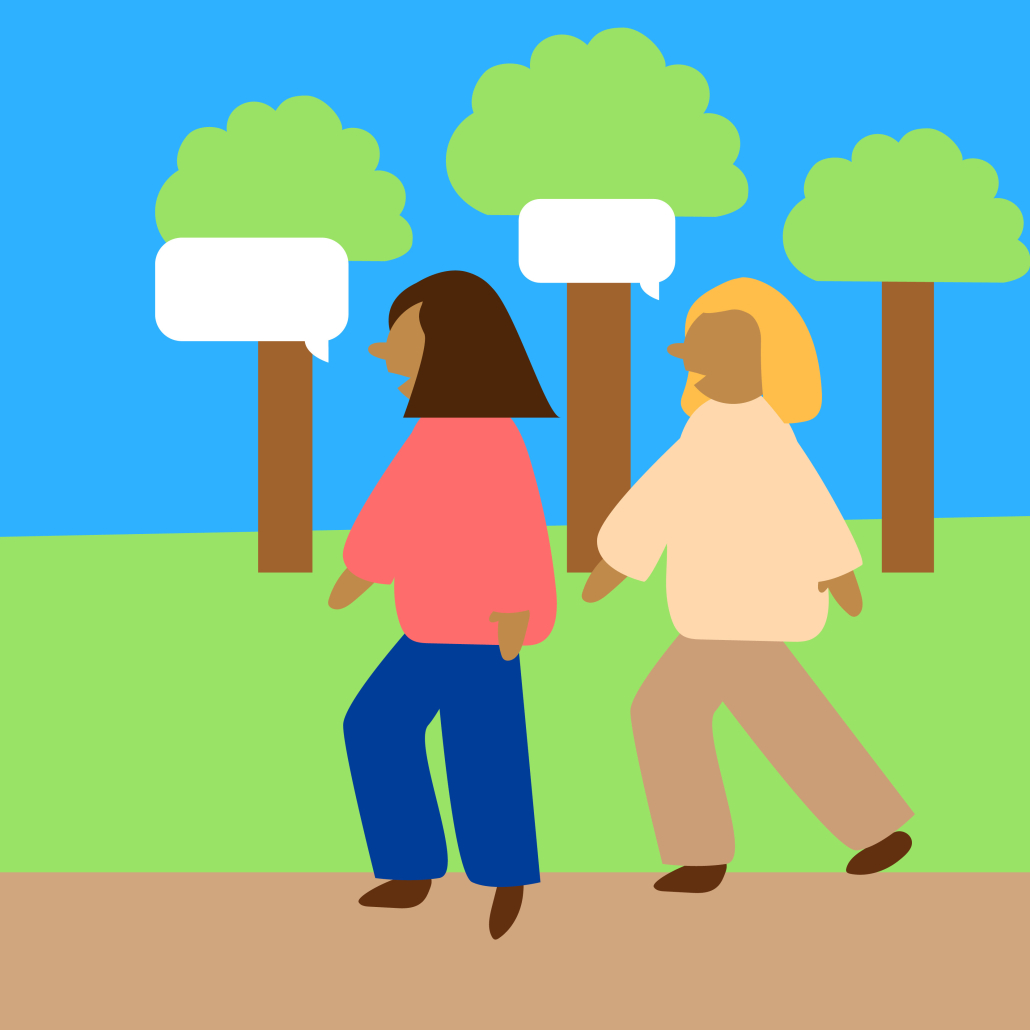
Walking sessions create a natural rhythm for conversation. Whether strolling through a park or urban environment or even pacing a hallway during a phone call, the steady movement helps pace the dialogue. The changing scenery can also serve as metaphorical touchpoints, inspiring new perspectives as the physical landscape shifts.
Activity-based coaching incorporates purposeful tasks, such as gardening together, playing sports or organising a space. These activities provide natural breaks in conversation, allowing insights to be integrated without awkward silences. They also create metaphorical opportunities—pruning what no longer serves, building something new, creating order from chaos.
Even in driving sessions or workshop environments where people can fidget, tinker, or build while talking, this can be transformative. When we’re semi-focused on using a tool or controlling a vehicle, this often bypasses the analytical brain’s censors, allowing more authentic expression.
When movement is essential
For some people, movement is vital for effective communication as they are simply unable to process information and articulate thoughts while sitting still. When we see somebody fidgeting or pacing, we can sometimes assume that they’re bored or stressed but, in reality, many folks need this movement in order to regulate sensory input and therefore focus on the conversation. When forced to remain still, mental resources get diverted to the effortful task of controlling the body rather than engaging with the discussion.
Movement-based coaching allows people to access their full cognitive capabilities without unnecessary physical constraints. This isn’t accommodation—it’s optimisation.
The benefits of non-traditional coaching spaces
If sustained eye contact makes you anxious or uncomfortable, you’re not alone. Evolution has programmed sustained eye contact as either an intimacy or dominance signal, which can hinder professional growth. During coaching, side-by-side positioning neutralises this tension.
Movement also helps people to navigate emotionally charged topics. The physical outlet helps prevent emotional overwhelm when discussing challenging issues like career transitions, relationship struggles, or identity questions. The body processes stress while the mind processes insights.
The most powerful, action-oriented coaching embodies the very change that thinkers seek. There’s an elegant alignment between walking a new path physically, whilst exploring new directions mentally. The coach and thinker literally move forward together, reinforcing the journey metaphor at the core of personal development.
Addressing our movement deficit
The evidence is compelling: as societies become more technologically advanced, our physical activity levels have plummeted. The average adult in Western Europe spends a staggering 9-10 hours daily in sedentary positions—at desks, in cars, or on couches. This represents a dramatic shift from our evolutionary history and carries significant health consequences.
By integrating movement into professional interactions, such as coaching, we begin to address this deficit in small but meaningful ways. A 45-minute walking coaching session might contribute 4,000-5,000 steps to a person’s day—almost half of the recommended daily target for adults. Over time, these movement-integrated sessions can help establish healthier lifestyles and show us that work and physical activity don’t need to be separate entities.
The beauty of this approach is that it doesn’t require additional time to be taken out of already busy schedules. Instead, it transforms necessary conversations into opportunities for physical movement, making the most efficient use of limited time resources.
Resistance is natural, but it doesn’t last
Initial scepticism about unconventional coaching approaches is common. “Shouldn’t we be sitting down for a serious conversation?” some might wonder. Others worry that walking or activity-based sessions might seem unprofessional or lack focus. Yet, most people who try movement-based coaching quickly recognise its benefits. Many report feeling more at ease, having unexpected breakthroughs and retaining insights better than in traditional settings. The informality of the format often becomes the very thing that enables formal progress for people who struggle to articulate feelings in office settings. Reduced performance pressure and increased neurological activation can therefore create an ideal learning state.
Adapting to individual needs
We need to recognise that coaching is far from “one size fits all” and that different people require different formats in different circumstances. Consider offering different options based on the topic, energy levels, weather, or individual preference. Some sessions might benefit from a face-to-face focus, while others need the creative stimulus of movement or activity.
Creating psychological safety through movement in coaching
Our traditional coaching environment can sometimes inadvertently create power dynamics that heighten vulnerability. The formal setting, the coach behind a desk and the expectation to maintain composure can all trigger performance anxiety rather than authentic exploration. Movement tends to equalise the relationship. Walking puts the coach and thinker on the same level while activities provide natural opportunities for competence and confidence to emerge. This shift in physical dynamics often translates to psychological safety.
Final thought: Movement in coaching needs to be built for the individual
Effective coaching meets people where they live—not just conceptually but physically by removing unnecessary friction from the growth process through coaching experiences that align with how many individuals naturally process information and emotion.
Movement-based coaching isn’t a gimmick or workaround – far from it. It’s a deliberate approach grounded in psychology, neuroscience, human experience and public health research. By giving people permission to move, fidget, build, or walk, we invite them to bring their full selves into the conversation while simultaneously addressing our societal movement deficit.
The most powerful coaching often happens when we shift not just the things that we discuss but also how and where we engage. For many people, the path to deeper insight starts with a single step—literally.
What is a “Thinker”?
In thoughtful coaching practice, the term “thinker” rather than “client” describes the individuals we work with. As Clare Pedrick explains in her book Simplifying Coaching, a “thinker” is someone engaged in deliberate reflection, analysis, and meaning-making. Unlike the more transactional term “client,” which can imply a service being delivered to a passive recipient, “thinker” acknowledges the collaborative agency, intelligence, and creative capacity that each person brings to the work.
If you don’t have a copy, grab one here
When we move during coaching sessions, we’re not just exercising our bodies—we’re creating optimal conditions for minds to explore, discover, and transform. By recognising those we work with as thinkers first and foremost, we acknowledge and respect the cognitive and emotional work they’re undertaking, whether that happens while sitting still or in motion.
If you’d like to find out more about my coaching, get in touch for a chat by emailing me here.
What to read next: Neuroinclusive meetings: what an excellent recipe looks like: https://theneurodivergentcoach.co.uk/neuroinclusive-meetings/