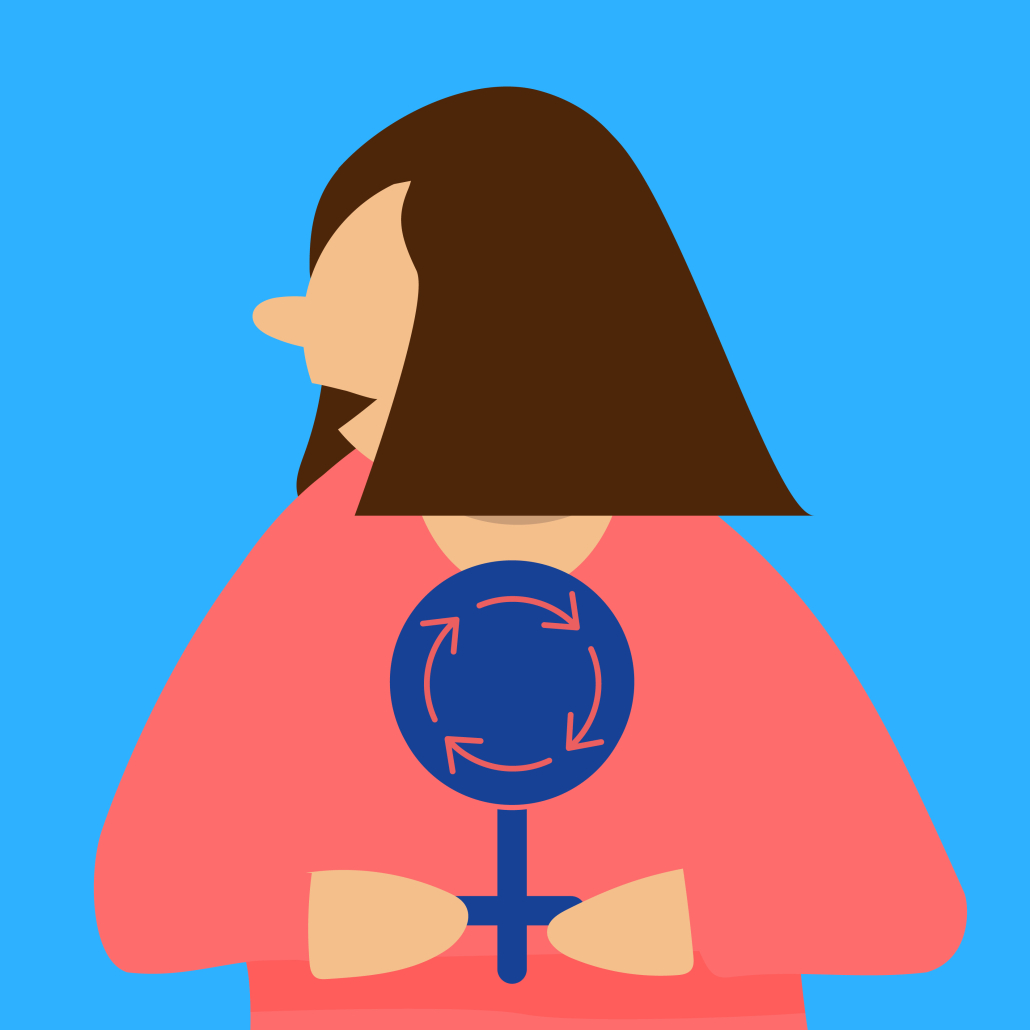
Neurodivergent women at work: the menstrual cycle matters
A Personal Note: Before diving into this topic, ‘ Neurodivergent women at work: the menstrual cycle matters’, I want to acknowledge something important when sharing my observations: I’m not trying to explain the female experience to other women, but rather to point out some patterns that I’ve noticed that I believe deserve more attention in our workplace conversations. To help support leaders, managers, and colleagues in creating more inclusive and kinder working environments.
A team member who consistently delivers strong creative work in week one is suddenly missing deadlines in week three. A colleague who runs the Monday meeting with confidence cannot manage the same room on another week. A high performer is privately exhausted and cannot explain why.
These patterns are easy to miss and even easier to misread. For many neurodivergent women, they are tied to a biological cycle that workplaces have been slow to acknowledge.
Personal note: I am not trying to explain the female experience to women. I am pointing at a pattern I keep seeing in coaching and Workplace Needs Assessments, one that deserves more attention from the leaders, managers, and colleagues who shape the working environment.
TL;DR: Hormonal fluctuations affect everyone who menstruates, but for many neurodivergent women, they amplify existing challenges with sensory processing, executive function, and emotional regulation. The result is a predictable monthly pattern that can be supported by small workplace adjustments. The cost of not addressing it is burnout, masking fatigue, and lost talent.
Why this matters for neurodivergent women at work
Just because something happens every month does not mean it loses its impact. Predictable does not mean easy. For neurodivergent women who already navigate higher sensory load, more demanding executive function, and more energy spent on masking, the cyclical hormonal shifts add another layer on top.
For too long, conversations about women’s biology at work have been treated as personal rather than structural. This is changing, but slowly. Recognising the intersection of neurodivergence and hormonal cycles is not about announcing menstruation in team meetings. It is about acknowledging that performance can be cyclical, and that this is a legitimate consideration alongside other adjustments.
The science in brief
The menstrual cycle has four phases, each shaped by different hormone levels.
Follicular phase (days 1 to 14): Rising oestrogen brings improved mood, cognition, and energy. Many neurodivergent women describe this as their most productive window.
Ovulation (around day 14): Oestrogen peaks. Confidence, sociability, and focus are often at their highest. This is a strong time for collaborative or creative work.
Luteal phase (days 15 to 28): Oestrogen drops while progesterone rises. Fatigue, irritability, and reduced executive function are common. This phase brings the most significant workplace challenges for many.
Menstruation (days 1 to 5): Both hormones are at their lowest. Energy is low, sensitivity is heightened, and recovery time matters.
These shifts affect everyone differently. For neurodivergent women they often interact with existing traits in ways that compound the impact.
How cycles interact with neurodivergent traits for neurodivergent women at work
For women with ADHD: Oestrogen modulates dopamine, the neurotransmitter at the heart of ADHD. Falling oestrogen in the luteal phase can dampen the effectiveness of stimulant medication, make initiation harder, and reduce the consistency of mood and motivation. A woman who runs project management beautifully in week one may genuinely struggle with the same work in week three. This is not a commitment issue. It is a biological one.
For autistic women: Change is often harder for autistic people generally, and the cycle is a recurring change happening inside the body. Sensory tolerance shifts. A meeting that was comfortable last week may feel overwhelming this week. Tolerance for fluorescent lighting, background noise, and unstructured conversation can drop sharply in the second half of the cycle.
For women with cyclical mental health: Premenstrual Dysphoric Disorder (PMDD) is significantly more common in neurodivergent women than in the general population. It produces severe mood and cognitive disruption that is genuinely disabling for days at a time.
What helps: practical steps for the individual
Track and identify patterns: Use a cycle tracking app to map mood, energy, sensory tolerance, and capacity across the month. Patterns become much easier to manage once they are named.
Design work around your phases: Schedule demanding cognitive work for high-energy phases. Save routine, structured tasks, templates, and checklists for lower-energy weeks. Build in recovery time around the lowest points.
Reduce sensory load when it counts: During heightened-sensitivity windows, choose quieter spaces, reduce visual clutter, and protect headphones-on time.
Have the conversation early: Talk to your manager about patterns during a phase when you feel resourced. Frame the conversation as optimising performance, not asking for concessions.
What helps: practical steps for managers and HR
Listen without dismissing: If a colleague names a pattern around her cycle, treat it as information about performance, not a personal disclosure to manage. The most common mistake is to underweight it.
Build flexibility into how the team works: Asynchronous communication, flexible scheduling, and remote options all reduce the cost of a low-energy week without requiring anyone to disclose anything.
Avoid scheduling assumptions: High-stakes presentations, full-day workshops, and intense decision-making sessions land better when the person has some control over when they happen.
Update inclusion policies: Most organisations have policies covering disability and wellbeing. Few of them name cyclical conditions explicitly. Adding this is a small change with a meaningful signal.
Treat masking as a cost, not a virtue: Many neurodivergent women hold it together through luteal weeks at huge personal cost. The team sees a smooth performance. The person ends the year exhausted. A workplace that quietly removes some of that cost gets a more sustainable employee.
The intersection of authenticity and professionalism
Many neurodivergent women describe professional masking as a constant. During the second half of the cycle, the cost of maintaining it can become unsustainable. The choice on offer is too often perform or disclose, and neither feels safe.
A workplace that is genuinely flexible removes the need for that binary. People can have a quiet week without explaining themselves. They can shift a meeting without justification. They can work from home on a heavy day without anyone reading meaning into it. None of this is special treatment. It is good design that benefits everyone.
Where to start with support for neurodivergent women at work
If you are noticing these patterns in your team, a Workplace Needs Assessment is the cleanest way to surface what is going on and identify the adjustments that will actually help. For broader awareness across the team, Talks and Workshops build the shared understanding that makes adjustments easier to land.
Reasonable adjustments: so what is reasonable?
A practical guide to what counts as reasonable and why the threshold often sits lower than managers think.
Manager role in workplace needs assessment: what HR leaders need to know
The most underused lever in workplace adjustments is the manager’s part. Here is how to use it well.
Coaching for neurodivergent employees: what HR leaders should consider
What coaching can and cannot do for neurodivergent staff, and how to commission it well.
Stay connected
If this post was useful, there is plenty more where it came from. Every month we share practical insights on neurodiversity, management, and making workplaces work better for everyone. Sign up to the newsletter here.